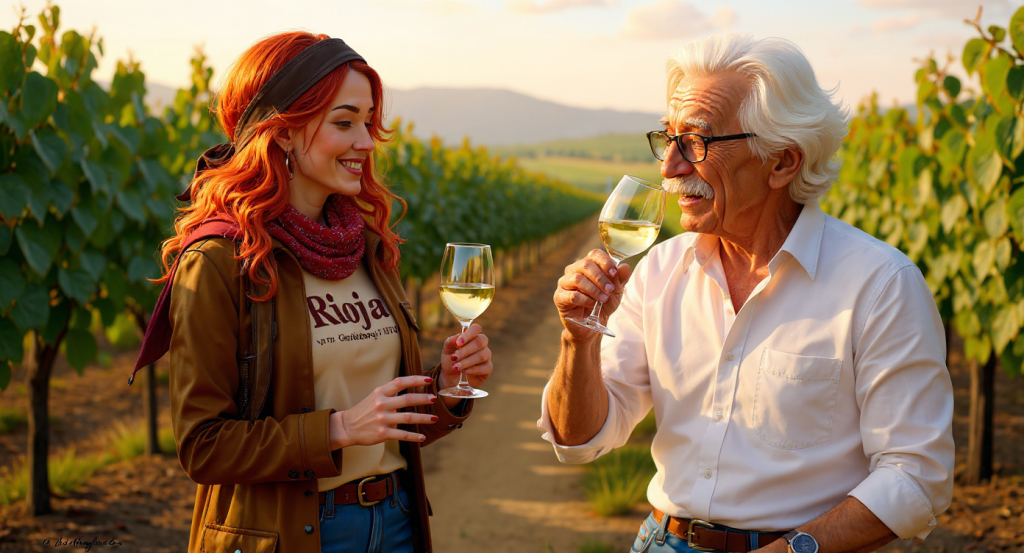
Isabella Rioja swirls her glass and smiles.
“Ask most people about Bordeaux,” she says, “and they’ll tell you it’s all about red wine.”
Professor Octavius Pinot nods.
“Which is precisely why Bordeaux white blends are so fascinating. They’ve always been there — quietly excellent — while the world was busy looking elsewhere.”
Why Bordeaux, and Why White?
Although Bordeaux is famous for red wine, white wines have always been part of the region’s fabric — particularly in the southern areas. The classic dry Bordeaux white blend brings together Sauvignon Blanc and Semillon, sometimes with a small addition of Muscadelle.
The logic is elegantly simple:
- Sauvignon Blanc contributes freshness, lift, aromatics, and acidity
- Semillon adds texture, weight, depth, and ageing potential
“On its own,” Octavius explains, “Sauvignon Blanc can be vivid but fleeting. Semillon gives it structure and longevity.”
Isabella nods.
“And suddenly Sauvignon Blanc stops being just refreshing — and starts becoming serious.”
A Question of Place: Graves and Pessac-Léognan
The heartland of serious dry Bordeaux whites lies in the Graves area, particularly Pessac-Léognan, where gravelly soils and a temperate Atlantic climate allow both varieties to ripen slowly while retaining freshness.
“These wines were never meant to be simple thirst-quenchers,” says Octavius.
“They were built for food — and for time.”
How These Wines Are Made
While styles vary, the best Bordeaux-inspired white blends often share common winemaking principles:
- Thoughtful blending to balance freshness and texture
- Partial barrel fermentation or ageing, especially for Semillon
- Lees contact to build mouthfeel and complexity
“Yes,” Isabella adds, “some components are wooded — but carefully. The oak supports the wine rather than announcing itself.”
The resulting wines often show citrus and stone fruit, subtle waxy or honeyed notes, herbal complexity, minerality, and the ability to age gracefully.
Why the Blend Works So Well
Sauvignon Blanc is one of the world’s most widely planted grapes — and also one of the most misunderstood.
“Too often,” Octavius observes, “it’s pushed toward immediate aromatics at the expense of depth.”
Semillon changes that dynamic. It slows Sauvignon down, rounds its edges, and gives the wine presence on the palate.
“This,” Isabella says, “is where balance replaces volume.”
Beyond Bordeaux: The New World Adopts the Blend
The success of the Sauvignon–Semillon partnership did not go unnoticed. In the New World, winemakers looking for more complexity than single-variety Sauvignon Blanc began exploring the blend in places such as Australia, Chile, California, and pockets of New Zealand.
What they discovered was a style that could express place, mature beautifully, and appeal to drinkers who value texture and nuance.
“It has never been a mass-market category,” Isabella notes,
“but it has a loyal and curious following.”
South Africa: A Natural Home for White Blends
If Bordeaux provided the blueprint, South Africa has become one of the most compelling modern interpreters of the style.
Old vines, diverse soils, and a climate that balances ripeness with freshness allow Sauvignon Blanc and Semillon to shine — particularly when blended.
“South African examples often sit perfectly between Old World restraint and New World generosity,” says Octavius.
These wines tend to offer clarity of fruit, natural texture, confident but subtle oak use, and excellent value relative to quality.
“They’re not trying to impress loudly,” Isabella adds.
“They’re trying to last.”
**Koos Grenache Weighs In:
Why White Blends Deserve More Respect**
Koos Grenache sniffs his glass and raises an eyebrow.
“You know what the problem with white blends is?” he says.
“They don’t scream — and too many people only listen when wine screams.”
He takes a sip.
“Sauvignon Blanc on its own can be great, but it’s often pushed to be loud and fast. Semillon slows it down. Gives it shoulders. Gives it somewhere to go.”
Koos shrugs.
“I’ve had Sauvignon that smells amazing and disappears halfway across the palate. Add Semillon, and suddenly the wine hangs around. It gets texture. It gets confidence.”
He smiles.
“And the irony? These blends are often made by some of the most serious producers — quietly — while everyone else chases the next trend.”
A pause.
“If you think white wine can’t be complex or age-worthy, you probably just haven’t been drinking enough blends.”
A Gentle Challenge for Your Next Wine Shop Visit
White Bordeaux blends — and their South African counterparts — may not dominate shelf space, but they reward curiosity.
So next time you’re in a wine shop, don’t just reach for the familiar.
Ask whether they stock any Sauvignon Blanc–Semillon blends.
In South Africa, a few names worth looking out for include:
- Vergelegen
- Constantia Glen
- Creation Wines
- André van Rensburg
The Uncorked & Curious Takeaway
Bordeaux may be famous for red wine, but its white blends tell a quieter, more nuanced story — one of balance, longevity, and confidence.
From gravel soils in France to coastal vineyards in South Africa, the marriage of Sauvignon Blanc and Semillon continues to prove its worth.
Isabella Rioja:
“Once you’ve had a great one, it’s hard to go back.”
Professor Octavius Pinot:
“Some classics don’t need reinvention — only rediscovery.”
 About Uncorked and Curious
Leave a comment