Introduction: A World of Blends
When you think of France’s Rhône Valley, one word should come to mind: blends. Syrah, Grenache, Mourvèdre, and a supporting cast of varietals have been combined for centuries to create wines that are greater than the sum of their parts. These blends — savory, spicy, structured — have inspired winemakers around the world. And nowhere has this inspiration burned brighter than in South Africa’s Swartland, where a band of rebels turned old bush vines into global icons.
The Conversation
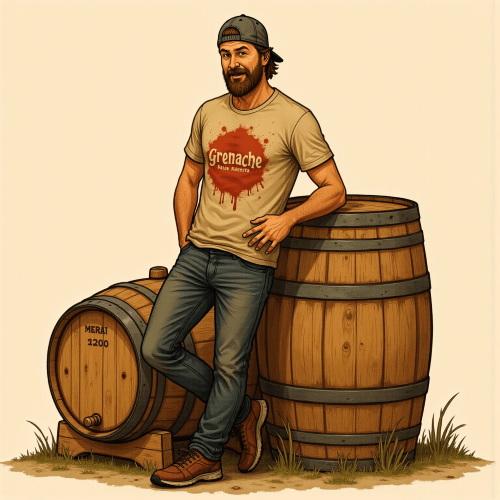
Koos
“Now this is my kind of wine. No castles or mottos — just good honest juice. A Swartland Rhône blend is all about Syrah for backbone, Grenache for a cheeky lift, Mourvèdre or Carignan for grip. And sometimes Cinsault to keep it downright smashable at a braai.”
Isabella
“Ah, Koos, but let’s not forget where it all began. In the Rhône Valley, Syrah reigns in the north — think Côte-Rôtie, Hermitage, Cornas — while Grenache dominates in the south at Châteauneuf-du-Pape, supported by Syrah and Mourvèdre. And the idea has travelled: GSM blends are staples in Australia, the Rhône Rangers champion them in California, and Spain’s Garnacha-Monastrell blends echo the same DNA.”
Octavius
“Quite so. The magic lies in balance: Syrah’s pepper and structure, Grenache’s generosity, Mourvèdre’s dark depth. Matured in large foudres or concrete rather than small new oak, the results are complex without excess. A chorus, not a solo performance.”
Koos
“And the Swartland nails it. Granite soils, koffieklip, and old dry-farmed bush vines give intensity like nowhere else. Eben Sadie with Columella, Adi Badenhorst, the Mullineuxs — they didn’t need fancy estates. They had grapes, guts, and a wild festival in Riebeek-Kasteel that rewrote the Cape’s story. The Swartland Revolution wasn’t just about wine — it was about spirit.”

“Koos on a sales trip, wines, Kombi, and plenty of frontier spirit.”
Isabella
“That festival turned the world’s eyes to Swartland. Suddenly, young winemakers without vineyards or big cellars were making some of the most exciting wines on the planet. And to this day, many rival — or surpass — the southern Rhône at a fraction of the price.”
Octavius
“Indeed. Granite and schist give Swartland Syrah its peppery edge; Mourvèdre thrives under the Cape sun; Grenache excels in Piekenierskloof. Add Cinsault for perfume and levity. And let us not forget the technical bravery — whole-bunch fermentation, native yeasts, restrained extraction. These are not wines of artifice, but of authenticity.”
Koos
“And authenticity tastes a lot better with a story, bru. That’s why I say — if you see ‘Red Blend’ on a list, don’t skip it. Ask if it’s Rhône-style, and if it’s Swartland, pour it. You’ll taste granite, spice, sunshine, and a bit of rebellion.”
Rhône Blends Worldwide
- France: Côte-Rôtie and Hermitage in the north (pure Syrah or co-fermented with Viognier); Châteauneuf-du-Pape and Gigondas in the south (Grenache-led GSMs).
- Australia: Barossa & McLaren Vale GSM blends — plush, fruit-forward, spicy.
- USA: California’s Rhône Rangers and Washington’s cool-climate Syrahs.
- Elsewhere: Chile, Argentina, and New Zealand, where Syrah especially thrives.
Key Takeaways for Readers
Why it matters: Rhône blends are versatile, food-friendly, and increasingly some of the Cape’s most distinctive reds.
What’s in a Rhône blend? Usually Syrah, Grenache, and Mourvèdre (GSM), with support from Cinsault, Carignan, and others.
South Africa’s Swartland: Granite soils, old vines, and a revolutionary spirit define the style.
Beyond the Swartland: GSM blends are also made in Stellenbosch, Wellington, Piekenierskloof, and other Cape regions, each adding their own terroir-driven twist.
 About Uncorked and Curious
Leave a comment