A Koos vs Octavius conversation, from harvest to bottle
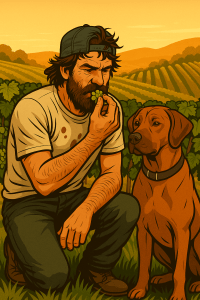
Koos and Chenin, his ridgeback, and constant companion
Harvest Time
Octavius Pinot
“Sauvignon Blanc harvest is all about timing — usually February to early March here in South Africa. We pick in the cool of the morning, even at night, to lock in those fresh aromas — lime, gooseberry, passionfruit.”
Koos Grenache
“Cool grapes, happy juice. Hot grapes? Forget it — your wine ends up smelling like overripe melon. And forget skin contact — whole bunches go straight to the crusher and de-stalker. We don’t want bitter phenolics in Sauvignon.”
Crushing, Cooling & Juice Handling
Octavius
“After crushing and destemming, the berries are separated from the bunches, lightly crushed and the juice runs free to a settling tank — but before it gets there, we chill it down with a mash cooler. This preserves delicate aromatics.”
Koos
“And here’s the trick — blanket the juice with nitrogen or CO₂. Same reason an apple turns brown when left out — oxidation kills those grassy, citrus notes. Sauvignon Blanc is made reductively — protect it from oxygen at every step.”
Fermentation: Stainless Steel & Cool Temps
Octavius
“Fermentation happens in stainless steel tanks — temperature-controlled, around 12–15°C. This slow, cool ferment locks in freshness and builds those classic thiol-driven aromas.”
Koos
“Thiols — that’s the fancy word for tropical fruit and cut grass vibes. We inoculate with cultured yeast strains here — chosen for their ability to boost those characters. Wild yeast? Great for barrel fermented old vine Chenin or Chardonnay, but Sauvignon needs consistency.”
Octavius
“Exactly. It’s the reason Marlborough in New Zealand and Sancerre in France produce such distinct but reliable Sauvignon Blanc styles — cool climate, reductive handling, and the right yeast.”
Post-Fermentation: Clean & Quick
Koos
“No oak, no fuss — Sauvignon Blanc rests on fine lees briefly, just to round the edges. Then we cold-stabilise so you don’t freak out about wine diamonds (tartaric crystals) in the bottle.”
Octavius
“Clarify, filter, polish — but lightly, so nothing strips away the vibrancy. Three to five months after harvest, it’s ready to bottle.” By July – August you could easily be drinking that years vintage however I prefer to let mine settle in the bottle for a few months longer.”
Fining & Vegan Options
Octavius
“Fining, if needed, is usually done with bentonite clay — stabilises proteins and is vegan-friendly.”
Bottling & Closure
Octavius
“Screwcap is standard here — keeps the wine fresh and avoids cork taint. And let’s be honest, this style is made to drink young, though a good South African Sauvignon can surprise you with one or two years of bottle age.”
Koos
“And no corkscrew at the braai? Even better.”
How It Differs From Europe
Octavius
“If you know French Sancerre, think of South African Sauvignon as the sunnier cousin — same grape, but more tropical fruit and less flint. Cooler zones like Elgin get closer to that Loire minerality, while Stellenbosch tends richer.”
Key Takeaways
- Destem and lightly crush Sauvignon Blanc; no skin contact.
- Cool the juice and blanket with nitrogen to prevent oxidation.
- Ferment in stainless steel at low temps for purity and aromatics.
- Quick turnaround: bottled in 3–5 months, almost always under screwcap.
- Style: drink fresh and vibrant, though some can age a year or two with grace.
- Can be bottled in a Bordeaux or Burgundy bottle.
 About Uncorked and Curious
Leave a comment